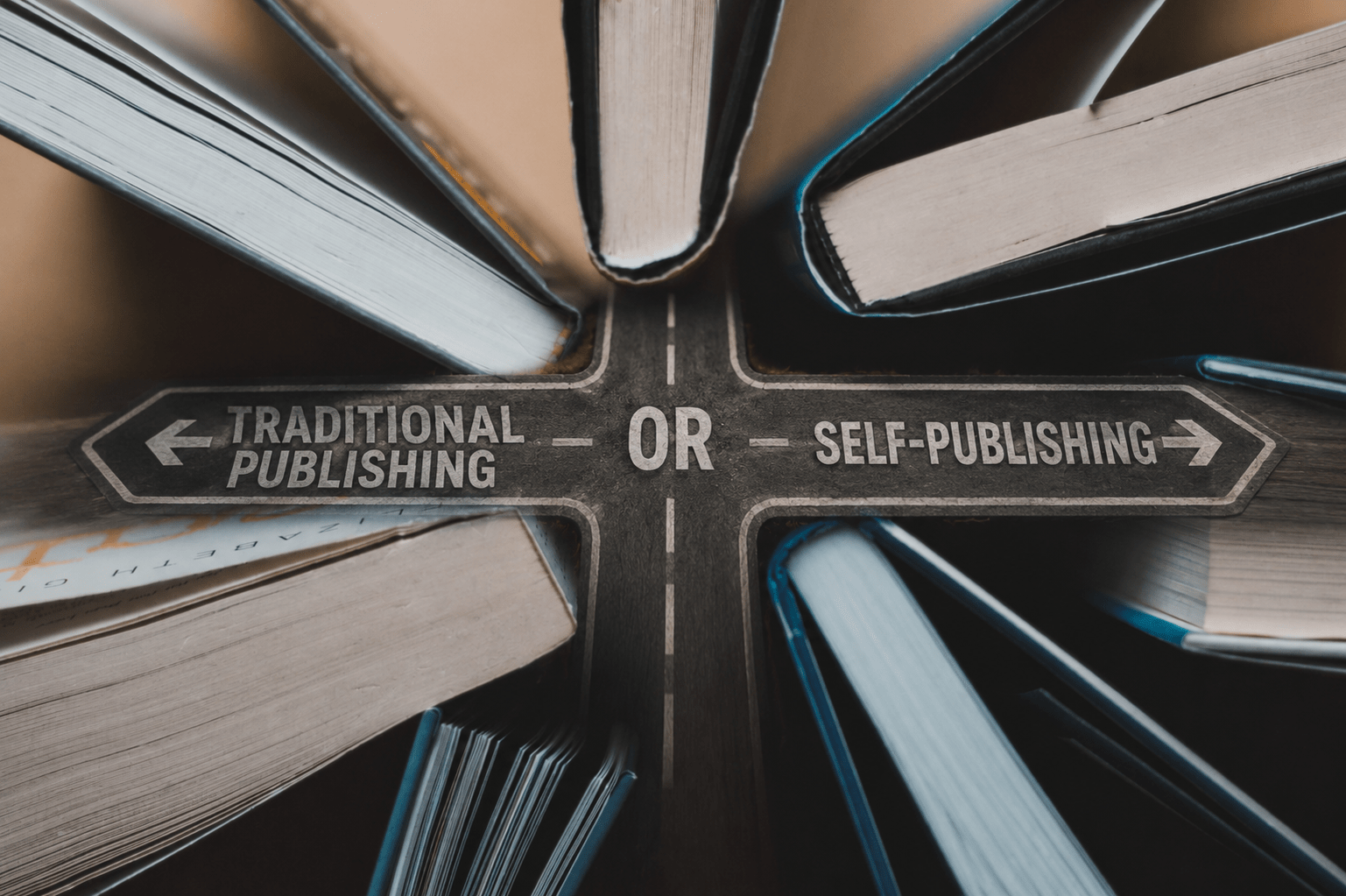
Self‑publishing and traditional publishing are two very different paths to getting a book into the world, and each one shapes the author’s experience, creative control, and long‑term career in distinct ways. Understanding the differences—and the advantages and disadvantages of each—helps you choose the route that aligns with your goals, resources, and vision as a writer.
Self‑publishing places full ownership and responsibility in the author’s hands. You become the writer, the project manager, the creative director, and in many cases, the marketer. This model has grown rapidly with platforms like Amazon Kindle Direct Publishing, IngramSpark, and Kobo Writing Life, which allow authors to upload manuscripts and distribute globally within days. The biggest advantage of self‑publishing is creative freedom. You control your cover design, your title, your release date, your pricing, and your content. No one can tell you to change your story to fit a trend or market demand. For many writers especially those
from underrepresented backgrounds this freedom is empowering. It allows you to tell the story you want to tell, in your own voice, without compromise.
Another major advantage is speed. Traditional publishing can take 18–24 months from acceptance to release. Self‑publishing can take a week. This makes it ideal for authors who want to build momentum quickly or release multiple books per year. Financially, self‑publishing also offers higher royalties, often 60–70% of the book’s sale price, compared to the 8–15% typically offered by traditional publishers.
However, these benefits come with significant challenges. The biggest disadvantage is that you bear all the costs such as editing, cover design, formatting, marketing, and sometimes advertising. A professionally produced book can cost anywhere from a few hundred to several thousand dollars. Without these investments, the book may struggle to compete in a crowded market. Another challenge is credibility and visibility. Traditional publishers have established networks, media connections, and bookstore relationships. Self‑published authors must build these from scratch. Marketing becomes a continuous effort, and success often depends on your ability to promote yourself, build a brand, and engage readers consistently.
Traditional publishing, on the other hand, follows a more structured and selective process. You typically need a literary agent, a polished manuscript or proposal, and patience. The biggest advantage of this route is industry validation. When a publisher accepts your book, it signals that professionals believe in your work. This can open doors to literary awards, bookstore placement, media coverage, and academic recognition, opportunities that are harder to secure independently.
Traditional publishers also provide professional support. They handle editing, cover design, printing, distribution, and
sometimes marketing. This allows authors to focus more on writing rather than managing the entire production process. Additionally, traditional publishers often pay an advance, which is money given upfront against future royalties. While advances vary widely, they offer financial security during the writing process.
Yet traditional publishing has its drawbacks. The most significant is loss of creative control. Editors may request major changes to your story, characters, or themes. Covers and titles are often chosen by the publisher, not the author. The process is also slow and highly competitive; many excellent manuscripts never make it past the submission stage. Financially, traditional publishing offers lower royalties, and authors may still be expected to participate heavily in marketing, especially if they are new.
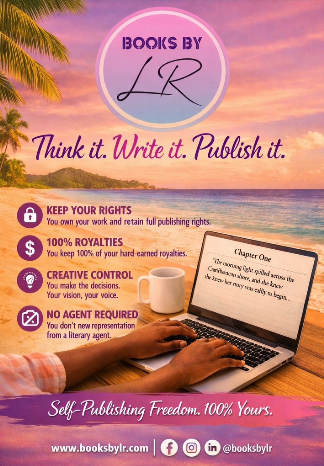
Think it. Write it. Publish it.
Your story deserves to be seen, heard, and celebrated. At Books by LR, we empower Caribbean and Global Majority authors to own their voices, their rights, and their creative freedom. From idea to publication, your words can shape worlds.
✨ Freedom. Control. 100% Yours.
📚 Contact us start your publishing journey today.
In essence, the difference between self‑publishing and traditional publishing comes down to control versus support, speed versus prestige, and independence versus infrastructure. Self‑publishing empowers you to own your entire creative journey but demands entrepreneurial effort. Traditional publishing offers professional backing and industry recognition but requires patience and compromise.
Choosing between them depends on your goals: Do you want full control and faster release, or do you value professional validation and long‑term literary positioning? Both paths can lead to success, what matters most is choosing the one that aligns with the writer you want to become.

